Table of Contents
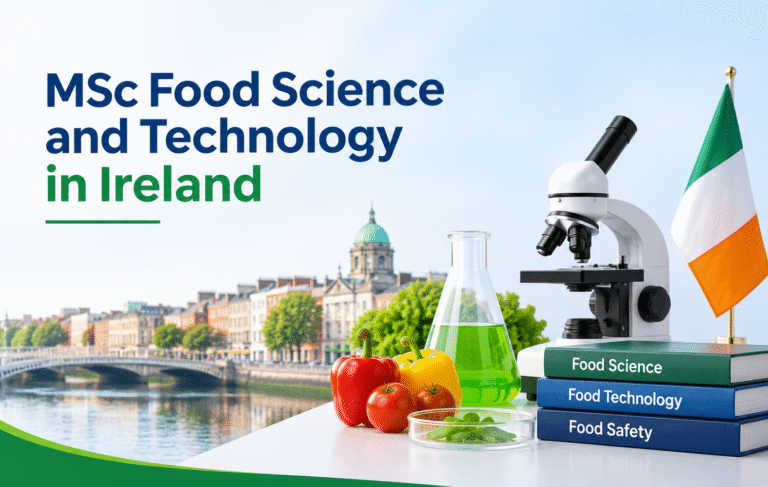
ToggleMSc Food Science and Technology in Ireland 2027: Complete Guide for Indian Students
Ireland is an attractive destination for Indian graduates interested in food science, food technology, nutrition, food safety, product development and sustainable food production. With postgraduate programmes that combine scientific knowledge, laboratory learning, research and industry-focused subjects, students can explore different career paths within the international food and beverage sector.
If you are planning to pursue an MSc Food Science and Technology in Ireland in 2027, choosing the right programme is an important first step. Irish universities offer several related postgraduate options, including Food Science, Food Science with Nutrition, Sustainable Food Technology and Food Product Development.
For students from Mumbai, Thane, Navi Mumbai, Dombivli and other parts of India, understanding course eligibility, university fees, admission requirements, scholarships and career opportunities can make the application process easier to plan.
Jetset VAdvisor Overseas Education helps students identify suitable Irish universities, compare postgraduate programmes, prepare applications and plan their finances through education loan and international fee-payment guidance.
Planning to study Food Science in Ireland in 2027? Get your academic profile evaluated and shortlist suitable universities with Jetset VAdvisor.
Find the Perfect Course Abroad in 3 Simple Steps.
Our counsellors have matched 500+ Indian students with the right course & university.
Why Study MSc Food Science and Technology in Ireland?
Food science is an interdisciplinary field that combines chemistry, microbiology, biology, engineering and technology to understand how food is produced, processed, preserved, packaged and evaluated.
Ireland has an established food and agri-food sector, making it a relevant study destination for students interested in food manufacturing, product innovation, quality management and food safety.
Here are some reasons Indian students may consider Ireland for postgraduate food science studies.
Industry-focused learning
Food science programmes may include subjects such as food processing, food microbiology, food chemistry, product development, food quality and sustainable production. These areas help students understand the scientific and technical requirements of the food industry.
Research and practical learning
Depending on the university and programme, students may have opportunities to undertake laboratory work, research projects, practical assignments and a dissertation.
Specialised postgraduate options
Students can explore programmes in:
- Food Science
- Food Science and Nutrition
- Food Technology
- Food Safety and Quality Management
- Sustainable Food Processing
- Food Product Development
- Functional Foods
- Food Innovation
International learning environment
Ireland attracts students from different countries and offers opportunities to study in a multicultural academic environment. Students can develop technical knowledge, research skills and communication abilities while preparing for international career opportunities.
Best Universities in Ireland for Food Science and Technology
When researching an MSc Food Science and Technology in Ireland, students should not limit their search to one exact course title. Some universities offer closely related degrees that may match the same academic and career interests.
The following institutions and programmes are worth exploring for 2027.
University College Cork – MSc Food Science
University College Cork (UCC) offers an MSc in Food Science through its School of Food and Nutritional Sciences.
The programme is relevant to graduates interested in food processing, food analysis, food product development, food microbiology and sustainable food technologies.
Programme highlights:
- Qualification: Master of Science
- Duration: One year full-time
- Study level: NFQ Level 9
- Programme areas: Food chemistry, food processing, food product development, food microbiology and research
- Research component: Food Science project
The university’s published 2026/27 programme information lists a non-EU tuition fee of €27,000. The fee for the 2027/28 academic year should be checked against the university’s updated fee schedule before applying.
UCC is a relevant option for students who want a dedicated postgraduate qualification in Food Science.
University College Dublin – MSc Food Science with Nutrition
University College Dublin (UCD) offers an MSc in Food Science with Nutrition. This programme combines food science knowledge with nutrition-related subjects and is suitable for students interested in the relationship between food, health, product development and the food industry.
Programme highlights:
- Qualification: MSc
- Duration: One year full-time
- Study areas: Food process technology, food microbiology and safety, food chemistry, food ingredients, food packaging and nutrition
- Research component: Research project or thesis
UCD’s published application information lists the September 2027 programme as opening on 1 October 2026. Applicants should confirm the current application status and course-specific requirements before submitting an application.
Dundalk Institute of Technology – MSc Sustainable Food Technology and Innovation
Dundalk Institute of Technology (DkIT) lists an MSc in Sustainable Food Technology and Innovation with a January 2027 start date.
The programme focuses on areas such as sustainable food production, innovation, quality management, food safety, data analytics and manufacturing operations.
Programme highlights:
- Qualification: MSc
- Study level: NFQ Level 9
- Duration: One or two years, depending on study mode
- Intake listed: January 2027
- Study areas: Food production, sustainable innovation, quality management and lean manufacturing
The published programme information describes blended delivery. Indian applicants should confirm whether the programme and its delivery format meet their intended study and Irish immigration requirements before proceeding.
Other related postgraduate options
Students may also explore programmes in:
- Functional Foods and Product Development
- Sustainable Food Processing
- Food Safety Management
- Food Regulatory Science
- Culinary Innovation and Food Product Development
- Agriculture and Food Science
These programmes are not identical to an MSc Food Science and Technology. Their suitability depends on the student’s academic background and preferred career direction.
Important: Course availability, tuition fees, entry requirements and international student eligibility can change. Always evaluate the exact programme for the intended 2027 intake rather than relying only on a university’s general course listing.
MSc Food Science and Technology in Ireland: Course Subjects
The curriculum depends on the university and specialisation. However, students may encounter several common subject areas during a postgraduate Food Science programme.
Food Chemistry
Students learn about the chemical composition of food, including proteins, carbohydrates, fats, vitamins and minerals. The subject helps explain how ingredients behave during processing, storage and preparation.
Food Microbiology
This area focuses on microorganisms in food, microbial growth, contamination, preservation and food safety.
Food Processing Technology
Students explore techniques used to transform raw materials into finished food products. Topics may include processing methods, preservation technologies and production efficiency.
Food Quality and Safety
Food quality and safety subjects introduce quality assurance, hygiene, risk management, testing and food safety systems.
Food Product Development
This subject focuses on developing and improving food products based on consumer requirements, ingredient functionality, nutritional considerations and manufacturing feasibility.
Food Packaging and Preservation
Students learn how packaging materials and preservation methods help protect food quality, extend shelf life and maintain product safety.
Research Project
Many master’s programmes include a research project or dissertation. Students may investigate a selected food science topic, analyse findings and present their research.
Eligibility for MSc Food Science in Ireland
Entry requirements vary between universities. Indian students should review the academic and English language criteria for each programme before applying.
Academic requirements
Applicants generally need:
- A recognised bachelor’s degree in Food Science, Food Technology, Food Engineering, Biotechnology, Microbiology, Chemistry, Biochemistry, Nutrition or a relevant subject.
- Academic performance meeting the university’s minimum entry requirement.
- Relevant academic subjects or background where required by the programme.
- Additional academic or professional evidence if requested by the university.
Some programmes may accept graduates from related science disciplines, while others may require a more specific academic background.
English language requirements
Universities may accept IELTS, PTE Academic, TOEFL or other approved English language qualifications.
The required score depends on the institution and programme. Students should check the individual course requirements rather than assuming that one English test score applies to every Irish university.
Documents required
Indian applicants may need to prepare:
- Academic transcripts
- Degree certificate or provisional certificate
- Updated CV or resume
- Statement of Purpose (SOP)
- Letters of Recommendation (LOR), if required
- English language test score
- Passport
- Work experience documents, where applicable
- Additional course-specific documents
A well-prepared application should clearly explain the student’s academic background, interest in food science and future career plans.
For more guidance, read our blog: How to Write SOP for Ireland Universities: Format and Tips.
MSc Food Science in Ireland: Fees and Cost of Studying
Tuition fees are an important part of planning an overseas education budget. The final amount depends on the university, programme, study mode and academic year.
For example, University College Cork has published a non-EU fee of €27,000 for its MSc Food Science for 2026/27. The 2027/28 fee may differ.
Students should also plan for living expenses and other costs, including:
- Accommodation
- Food and groceries
- Local transport
- Health insurance
- Study materials
- Personal expenses
- Visa-related costs
- Travel expenses
How to plan your Ireland study budget
Before selecting a university, prepare a complete budget that includes tuition fees and estimated living expenses for the entire study period.
Compare universities based on:
- Total tuition fees
- Course duration
- Accommodation availability and cost
- Location and transport
- Scholarship eligibility
- Course structure and practical learning
- Career relevance
For a broader financial overview, read our guide: Cost of Studying in Ireland for Indian Students.
Scholarships for Indian Students in Ireland
Scholarships can help reduce the financial burden of studying overseas. Depending on the institution, students may find merit-based awards, international student scholarships, programme-specific funding or other financial support.
Scholarship eligibility may depend on:
- Academic performance
- Course selection
- Nationality and residency
- Application timing
- Scholarship-specific requirements
- Availability of funding
How to improve your scholarship application
- Maintain a strong academic record.
- Shortlist universities that offer scholarships to international students.
- Prepare your application documents carefully.
- Submit your university application early where possible.
- Check scholarship deadlines separately from course deadlines.
- Review the terms and conditions of each award.
Students researching Irish institutions may also find our guide to National College of Ireland Scholarships useful for understanding scholarship-related planning. However, National College of Ireland should not be assumed to offer an MSc Food Science programme; this is a separate institution and course search.
Jetset VAdvisor helps students identify relevant scholarship opportunities based on their academic profile and shortlisted universities.
January 2027 and September 2027 Intakes in Ireland
The availability of an intake depends on the university and the specific programme.
January 2027 intake
Some Irish institutions offer selected postgraduate programmes in January. However, January availability should never be assumed for every Food Science specialisation.
DkIT lists a January 2027 start for its MSc in Sustainable Food Technology and Innovation. Applicants must confirm the latest course availability, delivery format and eligibility for international students.
For more information, read: Best Courses in Ireland January 2027 Intake.
You can also explore our guide to the Ireland January 2027 Intake Timeline.
September 2027 intake
September is a major admission period for postgraduate programmes in Ireland. Students targeting this intake should begin researching courses and preparing documents well in advance.
A suggested planning timeline is:
Period | Recommended activity |
November–December 2026 | Research universities and evaluate eligibility |
December 2026–January 2027 | Prepare documents and English test requirements |
January–March 2027 | Submit applications where applications are open |
March–May 2027 | Review offers and scholarship options |
April–June 2027 | Arrange education loan and financial documents |
June–August 2027 | Complete remaining admission and visa preparations |
September 2027 | Begin the academic programme, subject to university dates |
Actual deadlines may be earlier, and some programmes close once available places are filled.
For a wider admission overview, read: Ireland University Application Deadlines 2027.
Career Opportunities After MSc Food Science in Ireland
A postgraduate qualification in Food Science can prepare graduates for different roles across food manufacturing, research, quality assurance, product development and food safety.
Career options depend on the student’s specialisation, practical experience, technical skills and the requirements of individual employers.
Potential job roles include:
Career role | Typical area of work |
Food Technologist | Food processing and production |
Quality Assurance Executive | Product quality and manufacturing standards |
Food Safety Specialist | Food safety systems and compliance |
Product Development Technologist | New food products and innovation |
Food Microbiologist | Microbial testing and food safety |
Research Assistant | Laboratory and food science research |
Quality Control Analyst | Testing and quality monitoring |
Food Production Supervisor | Production operations and processes |
Industries that may recruit Food Science graduates
Graduates may explore opportunities in:
- Food and beverage manufacturing
- Dairy and meat processing
- Food ingredient companies
- Food testing laboratories
- Research and development
- Food packaging
- Quality assurance and regulatory functions
- Agricultural and food production businesses
Students should research current vacancies and employer requirements before deciding on a specialisation. A master’s degree does not guarantee employment, and work eligibility depends on the applicable immigration rules.
Education Loan for MSc Food Science in Ireland
Financing an international master’s programme requires careful planning. Indian students may consider education loans to cover eligible expenses such as tuition fees, accommodation and other approved education-related costs.
Secured education loan
A secured education loan generally requires collateral, such as property or other accepted security. Loan terms depend on the lender and the applicant’s financial profile.
Unsecured education loan
An unsecured education loan does not generally require property collateral. Approval and loan limits depend on factors such as the university, course, academic profile, co-applicant and lender policies.
What documents may be required?
- University offer letter
- Academic records
- Identity and address documents
- Income documents of the co-applicant
- Bank statements
- Collateral documents, where applicable
- Estimated cost of education
How Jetset VAdvisor helps
Jetset VAdvisor provides education loan assistance to students planning to study in Ireland. Our support includes:
- Understanding loan eligibility
- Guidance on secured and unsecured options
- Collateral and non-collateral loan guidance
- Documentation support
- Financial planning
- Coordination with suitable lenders
Explore our Education Loan Assistance page to understand how you can plan your study budget.
Need help planning your Ireland education loan? Speak with our team to understand possible funding options based on your university and academic profile.
Pay Ireland University Tuition Fees Through Flywire
After receiving an admission offer, students may need to pay an application deposit or tuition fee according to the university’s payment instructions.
Some universities provide Flywire as an international payment option. Availability and payment methods depend on the institution.
Jetset VAdvisor offers Flywire fee-payment guidance to help students understand the payment process.
Our support includes:
- Understanding university payment instructions
- Guidance on initiating an international fee transfer
- Reviewing payment details before submission
- Understanding transaction tracking and confirmation
- Guidance on retaining payment records
Students should always use the payment channel authorised by their university and check the final amount, currency and applicable charges before transferring funds.
Ireland Student Visa Guidance for Indian Students
Indian students who receive admission to an eligible full-time programme may need to apply for the appropriate Irish student immigration permission.
The visa process involves more than an offer letter. Applicants should prepare their academic, financial and personal documents carefully.
Common preparation areas include:
- University offer and enrolment documents
- Tuition fee payment evidence, where required
- Financial evidence
- Academic records
- English language evidence, where applicable
- Passport and application documents
- Medical insurance arrangements
- Explanation of study plans and intentions
The exact documentation and financial requirements depend on the applicant’s circumstances and the immigration rules in force at the time of application.
For a detailed overview, read: Ireland Student Visa for Indian Students.
Jetset VAdvisor assists students with visa documentation, financial preparation and application guidance as part of the wider admission journey.
Why Choose Jetset VAdvisor for MSc Food Science in Ireland?
After receiving your university offer, you may need to pay tuition fees from India to your selected Dub
Choosing the right course is important, but students also need a clear plan for university applications, funding, fee payments and visa preparation.
Jetset VAdvisor Overseas Education supports students from Mumbai, Thane, Navi Mumbai, Dombivli, Kalyan and other parts of India who are planning to study in Ireland.
Our study abroad services
Profile Evaluation
We assess your academic background, previous qualifications and career interests to help identify suitable postgraduate options.
Course Finder
Our Course Finder support helps students explore courses based on academic eligibility, specialisation, budget and career goals.
University Shortlisting
We help compare universities and programmes based on tuition fees, course content, entry requirements, location and intake availability.
Admission Application Assistance
Get guidance with application forms, academic documents and university application procedures.
SOP and LOR Guidance
We help students organise their academic and career information and prepare supporting documents for university applications.
Scholarship Assistance
We help identify scholarship opportunities that may match your profile and shortlisted universities.
Education Loan Assistance
Explore secured and unsecured education loan options and receive guidance with the required documentation.
Flywire Fee Payment Guidance
Get assistance understanding international tuition fee payment procedures through university-approved payment channels.
Student Visa Assistance
Receive guidance with visa documentation and financial preparation.
Accommodation and Pre-departure Support
Prepare for your move to Ireland with guidance on accommodation and pre-departure arrangements.
Explore our Study Abroad Services to learn more.
ai institution.
International fee payments involve exchange rates, payment instructions, transaction tracking and university-specific requirements.
Jetset VAdvisor provides guidance on international tuition fee payments through Flywire, where supported by the university.
Our support includes:
- Understanding Flywire payment instructions.
- International tuition fee payment guidance.
- Payment documentation assistance.
- Transaction tracking guidance.
- Payment process support.
How to Apply for MSc Food Science and Technology in Ireland from Mumbai
Students can follow a structured process to plan their applications.
Step 1: Evaluate your academic profile
Review your bachelor’s degree, subjects, marks and relevant experience.
Step 2: Identify suitable programmes
Explore MSc Food Science, Food Science with Nutrition, Sustainable Food Technology and related postgraduate programmes.
Step 3: Compare universities
Compare course modules, fees, duration, location, eligibility and intake availability.
Step 4: Prepare application documents
Arrange your transcripts, degree certificates, CV, SOP, recommendations and English language test results where required.
Step 5: Submit your university applications
Apply according to the university’s application process and programme deadlines.
Step 6: Review admission offers and scholarships
Compare your offers, tuition fees, conditions and scholarship opportunities before making a decision.
Step 7: Arrange education funding
Explore suitable education loan options and prepare the financial documents required for your plans.
Step 8: Complete tuition fee payment and visa preparation
Follow your university’s authorised fee-payment instructions and prepare your student visa documents.
Step 9: Plan accommodation and travel
Once the relevant admission and immigration steps are completed, prepare for your move to Ireland.
Jetset VAdvisor can guide you through these stages, from course selection to pre-departure planning.
Plan Your MSc Food Science Journey in Ireland with Jetset VAdvisor
Choosing a postgraduate programme in Food Science is a significant academic and financial decision. Before applying, compare the course curriculum, university requirements, tuition fees, scholarship options and career relevance.
Whether you are considering MSc Food Science at University College Cork, MSc Food Science with Nutrition at University College Dublin or a related programme in sustainable food technology, the right course should match your academic background and long-term goals.
Jetset VAdvisor supports students looking for study abroad consultants for Ireland, Ireland Education Consultants in Mumbai and personalised admission guidance.
From Course Finder and university shortlisting to education loan assistance, Flywire fee-payment guidance and student visa preparation, our team can help you plan each stage of your Ireland application.
Planning to study MSc Food Science in Ireland in 2027?
Get your profile evaluated and start shortlisting suitable universities with Jetset VAdvisor.
Frequently Asked Questions (FAQs)
Can Indian students study MSc Food Science in Ireland?
Yes. Indian students can apply to suitable postgraduate Food Science programmes if they meet the university’s academic, English language and other admission requirements.
Which universities offer MSc Food Science courses in Ireland?
University College Cork offers MSc Food Science, while University College Dublin offers MSc Food Science with Nutrition. Students can also explore related programmes in sustainable food technology, food safety and product development.
What is the duration of MSc Food Science in Ireland?
Many full-time taught master’s programmes in this area are around one year. However, duration depends on the university, programme and study mode.
What is the eligibility for MSc Food Science in Ireland?
Applicants generally need a recognised bachelor’s degree in Food Science, Food Technology or a related science discipline. Specific academic requirements differ by programme.
What is the IELTS requirement for MSc Food Science in Ireland?
IELTS requirements vary by university and course. Applicants should check the current English language requirements for their selected programme.