Table of Contents
ToggleIntroduction
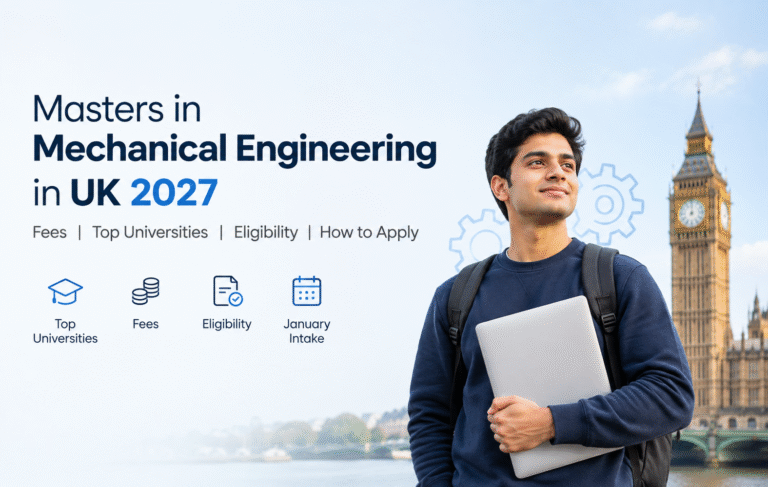
Planning to pursue a Masters in Mechanical Engineering in the UK in 2027? The UK is a popular destination for engineering graduates looking for internationally recognised education, specialised Master’s programmes and exposure to global industries.
For Indian students, choosing the right university involves more than comparing tuition fees. You need to evaluate the course curriculum, eligibility requirements, English language scores, intake availability, living costs, scholarships, education loan options and post-study career opportunities.
If you are planning to study Mechanical Engineering in the UK from Mumbai, getting your university shortlist and application strategy right can make the process considerably easier.
Jetset VAdvisor helps students with the complete overseas education journey from profile evaluation and university selection to applications, education loans, Flywire fee payments, visa assistance and pre-departure guidance.
Why Study Masters in Mechanical Engineering in UK?
A Master’s degree in Mechanical Engineering can help students build advanced knowledge in areas such as mechanical design, manufacturing, robotics, automation, energy systems, thermodynamics, materials and engineering management.
UK universities offer a wide range of postgraduate engineering programmes, allowing students to select courses based on their academic background and career interests.
Some programmes are designed specifically around advanced mechanical engineering, while others allow students to specialise in areas such as:
- Mechanical Design
- Manufacturing Engineering
- Automotive Engineering
- Aerospace Engineering
- Robotics and Automation
- Mechatronics
- Renewable Energy
- Computational Engineering
- Control Systems
- Engineering Management
- Advanced Materials
- Energy Systems
For Indian students with a BE/BTech in Mechanical Engineering or a related engineering discipline, the UK can offer multiple postgraduate study pathways.
Masters in Mechanical Engineering in UK: Quick Overview
Particular | Details |
Degree | MSc / Master’s in Mechanical Engineering |
Study Level | Postgraduate |
Typical Duration | 1 year for many full-time programmes |
Intake | September and selected January intakes |
Eligibility | Relevant Bachelor’s degree |
English Test | IELTS / PTE / other accepted tests depending on university |
Tuition Fees | Varies by university and programme |
Living Costs | Depends on city and lifestyle |
Scholarships | University-specific and external options |
Funding | Education loans and other funding options |
Application | Online university application |
Career Areas | Mechanical, manufacturing, automotive, aerospace, energy, robotics and related fields |
Important: Fees, entry requirements and January 2027 availability vary by university. Students should verify the latest requirements before applying.
Top Universities for Mechanical Engineering in UK
The UK has several universities offering postgraduate programmes related to Mechanical Engineering and advanced engineering.
Depending on your academic profile, budget, preferred location and career goals, your shortlist may include universities such as:
- University College London (UCL)
- University of Manchester
- University of Birmingham
- University of Southampton
- University of Sheffield
- University of Leeds
- University of Nottingham
- University of Bristol
- University of Strathclyde
- University of Glasgow
- University of Exeter
- University of Portsmouth
- University of Chester
The best university for a student depends on individual requirements, including academic profile, specialisation, tuition budget, location and programme structure.
Instead of applying randomly to multiple universities, students should create a balanced shortlist based on their profile.
How to Choose a Mechanical Engineering University in UK
Consider:
- Course modules and specialisations
- University entry requirements
- Tuition fees
- Location and living expenses
- Industry connections
- Laboratory and research facilities
- Placement or internship opportunities
- Accreditation where relevant
- Scholarships
- Graduate career opportunities
Masters in Mechanical Engineering UK Fees
One of the first questions Indian students ask is:
How much does a Master’s in Mechanical Engineering cost in the UK?
The answer varies considerably depending on the university and programme.
International tuition fees for UK Master’s programmes can range from approximately £18,000 to £45,000+, although individual programmes may fall outside this range.
Students should check the official university website for the latest 2027 fee before making a financial decision.
Estimated Study Budget
Expense | Approximate Range |
Tuition Fees | £18,000–£45,000+ |
Accommodation | Varies by city |
Food & Daily Expenses | Varies |
Transportation | Varies |
Visa & Related Costs | As applicable |
Health-related immigration costs | As applicable |
Flight | Depends on season and booking |
Your total cost of studying in the UK depends heavily on the university, city and lifestyle.
Students studying in London may have different living expenses compared with students studying in cities such as Manchester, Birmingham, Sheffield, Leeds or Portsmouth.
Mechanical Engineering UK Fees for Indian Students
When converting UK tuition fees into Indian rupees, students should remember that exchange rates fluctuate.
For example, a tuition fee of £25,000 cannot be treated as a fixed INR amount throughout the admission cycle.
Therefore, when planning your budget, consider:
- Tuition fees
- Exchange-rate fluctuations
- Accommodation deposit
- University deposit
- Visa-related expenses
- Travel costs
- Living expenses
- Emergency funds
- Education loan interest and repayment terms
This is where professional financial planning can help students understand the overall cost before accepting an offer.
Masters in Mechanical Engineering UK Eligibility
Eligibility requirements differ between universities.
Generally, applicants should have:
- A recognised Bachelor’s degree
- Relevant academic background
- Required academic performance
- English language proficiency
- Any programme-specific prerequisites
- Additional documents requested by the university
Students with a BE/BTech in Mechanical Engineering are commonly relevant applicants for Mechanical Engineering Master’s programmes, but each university determines its own eligibility.
Related backgrounds may also be considered for certain programmes depending on the course structure.
Documents Usually Required
Students may need:
- Academic transcripts
- Degree/provisional certificate
- Passport
- CV/resume
- Statement of Purpose (SOP)
- Letters of Recommendation (LOR)
- English language test score
- Work experience documents, if applicable
- Additional documents requested by the university
IELTS, PTE & English Requirements for Mechanical Engineering UK
English language requirements vary between universities.
Many UK universities accept IELTS, while some institutions may accept PTE Academic, TOEFL, Duolingo English Test or other approved alternatives, depending on their policies.
A common IELTS requirement for postgraduate programmes can be around 6.0–6.5 overall, but this should never be assumed for every university.
Students should check:
- Overall IELTS score
- Minimum individual band
- PTE overall score
- Minimum section scores
- Accepted English tests
- Test validity
- English-language exemptions
Don’t Have IELTS Yet?
You can first evaluate your university options and then determine which English test is appropriate for your target institutions.
January 2027 Intake for Mechanical Engineering in UK
Students who cannot or do not want to wait for the September intake can explore January 2027 intake UK universities where suitable Mechanical Engineering programmes are available.
However, January intake availability is more limited than September intake.
Students interested in January 2027 should start early because they may need time for:
Profile evaluation → University shortlist → Application → Offer → Education loan → Fee payment → CAS → Visa → Travel
Don’t wait until the final weeks to begin the process.
January 2027 Application Timeline
Stage | Suggested Period |
Profile evaluation | Now |
Course & university research | Early stage |
English test preparation | As required |
University applications | As soon as applications open |
Offer & conditions | After application |
Education loan | After/alongside offer |
Fee payment | As required |
CAS process | Before visa |
Student visa | After CAS and required documents |
Travel preparation | Before departure |
Exact deadlines differ by university and programme.
How to Apply for Masters in Mechanical Engineering in UK
The UK university application process generally involves several steps.
Step 1: Profile Evaluation
Start by assessing:
- Academic qualifications
- CGPA/percentage
- Graduation subject
- Backlogs, if applicable
- Work experience
- English test status
- Budget
- Career goals
Step 2: Course Selection
Don’t choose a university based only on ranking.
Compare:
- Modules
- Specialisations
- Duration
- Tuition fees
- Location
- Career opportunities
- Entry requirements
- Intake
Step 3: University Shortlisting
Create a practical shortlist based on your profile.
A good shortlist can include universities across different levels of admission competitiveness and budget ranges.
Step 4: Prepare Your Documents
Prepare your:
- SOP
- LORs
- Resume
- Academic documents
- Passport
- English test results
- Work experience documents
Step 5: Submit Applications
Applications are submitted according to each university’s application procedure.
Step 6: Receive Your Offer
You may receive:
- Conditional offer
- Unconditional offer
- Request for additional documents
Step 7: Arrange Funding
Once your admission is progressing, plan for tuition and living expenses.
This can include:
- Personal funds
- Scholarships
- Education loans
- Family funding
Step 8: Pay University Fees
Once required, students need to make the university payment through an accepted payment method.
Flywire is one payment platform used by many universities for international student payments.
Step 9: CAS & Visa
After fulfilling the university’s requirements and completing the relevant payment/processes, eligible students proceed toward the CAS and UK Student visa process.
Step 10: Pre-Departure
Arrange:
- Accommodation
- Flight
- Forex
- Travel documents
- Insurance/health-related requirements as applicable
- Airport planning
- Essential items
Education Loan for Masters in Mechanical Engineering UK
For many Indian students, tuition fees and living expenses make financing an important part of the study-abroad decision.
An education loan for studying in the UK can help eligible students finance expenses such as:
- Tuition fees
- Accommodation
- Living expenses
- Travel
- Course-related expenses
- Other eligible educational costs
Loan availability and terms depend on the lender and applicant profile.
Secured vs Unsecured Education Loan
Students may explore different education loan structures, including:
Secured Education Loan
A loan backed by eligible collateral/security.
Unsecured Education Loan
A loan that may be available without traditional property collateral, subject to lender eligibility and approval.
Factors that can affect loan eligibility include:
- University
- Course
- Academic profile
- Co-applicant
- Loan amount
- Income
- Credit profile
- Collateral
- Lender policies
Flywire for UK University Fee Payment
After receiving your offer, international fee payment becomes an important step.
Flywire provides an international payment solution used by many educational institutions.
Depending on the university and available payment options, students may use Flywire to make international education payments.
Potential advantages can include:
- International payment support
- Payment tracking
- Multiple payment options depending on destination/institution
- Transaction status updates
- Support for international students
However, payment methods vary by university.
Jetset VAdvisor Flywire Assistance
Jetset VAdvisor can help students understand the university fee payment process through Flywire, where applicable, and guide them through the payment stage.
Scholarships for Mechanical Engineering Masters in UK
Scholarships can reduce the financial burden for eligible international students.
Depending on the university and scholarship, students may find:
- Merit-based scholarships
- International student scholarships
- University-specific tuition discounts
- Country-specific scholarships
- Engineering-related funding
- External scholarships
Scholarship criteria may include:
- Academic performance
- Nationality
- Course
- University
- Application deadline
- Leadership or extracurricular achievements
Always check the scholarship’s official terms before relying on it in your financial plan.
Why Choose Jetset VAdvisor for UK Education?
A study abroad consultant in Mumbai can help coordinate multiple stages of the process instead of treating admission, financing and visa as completely separate activities.
For a Mechanical Engineering applicant, this can include:
Profile Evaluation
Understanding your academics, work experience and goals.
Course & University Shortlisting
Identifying programmes that align with your profile and budget.
Application Assistance
Supporting university application preparation and submission.
SOP/LOR/Resume Guidance
Helping you prepare your application documents.
Scholarship Guidance
Identifying relevant university funding opportunities.
Education Loan Assistance
Helping you understand secured and unsecured education loan options.
Flywire Assistance
Guidance with international university fee payment where applicable.
CAS Assistance
Support through the relevant CAS stage after admission requirements are fulfilled.
UK Student Visa Assistance
Guidance with the visa documentation and application process.
Accommodation Assistance
Support with planning your student accommodation.
Forex Assistance
Guidance on managing your international currency requirements.
Pre-Departure Support
Helping you prepare for your journey to the UK.
Start Your UK Mechanical Engineering Application
Choosing a Master’s programme in the UK involves more than finding a university and submitting an application.
You need to identify the right course, understand eligibility, calculate your total budget, explore funding, prepare your documents and plan your admission and visa journey.
If you are a Mechanical Engineering graduate planning for 2027 UK intake, now is the right time to evaluate your options and build an application plan.
What is the duration of a Masters in Mechanical Engineering in UK?
Many full-time UK Master’s programmes are designed to be completed in around one year, although the exact duration depends on the university and programme.
Can Indian students study Mechanical Engineering in UK after BTech?
Yes, students with a relevant BTech/BE background can apply for suitable Master’s programmes, subject to individual university eligibility requirements.
How much does Masters in Mechanical Engineering cost in UK?
Tuition fees vary significantly between universities. International students should check the latest programme-specific fees and also budget for accommodation, living expenses, travel and other costs.
Is IELTS mandatory for Masters in Mechanical Engineering in UK?
Not necessarily for every university. Requirements vary, and some universities may accept alternative English-language tests or exemptions under specified conditions.
Can I get an education loan for Masters in Mechanical Engineering UK?
Eligible students may be able to obtain secured or unsecured education loans depending on the lender, university, course, applicant profile and other financial criteria.