Table of Contents
ToggleIntroduction
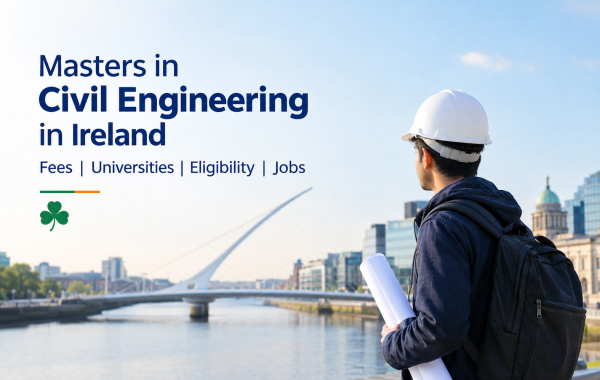
Ireland has become an increasingly popular destination for Indian students looking to pursue postgraduate engineering education in an English-speaking country. A Masters in Civil Engineering in Ireland can offer opportunities to specialise in areas such as structural engineering, construction management, transportation, environmental engineering and infrastructure.
For students from Mumbai and other parts of India, choosing an Irish university involves more than comparing tuition fees. You need to look at course curriculum, university requirements, English-language scores, application deadlines, living costs, scholarships, career opportunities and funding options before applying.
Ireland also offers postgraduate programmes across traditional civil engineering and related fields, allowing students to select a course based on their previous degree and career goals.
This guide covers the important information Indian students need before applying for a Civil Engineering Masters in Ireland in 2027.
Why Study Masters in Civil Engineering in Ireland?
Ireland combines internationally recognised universities, English-taught programmes and a strong economy with significant activity in construction, infrastructure, engineering and technology.
Some reasons students consider Ireland for postgraduate civil engineering include:
- Master’s programmes taught in English
- Specialisations across civil and construction engineering
- Opportunities to gain international academic experience
- Industry-oriented postgraduate programmes
- International student community
- Potential career opportunities after graduation
- Scholarships and university funding options
- Access to education financing for eligible students
For an Indian engineering graduate, Ireland can therefore be considered alongside destinations such as the UK, Germany, Australia and other European study destinations.
However, the right destination depends on your academic profile, budget, preferred specialisation and long-term career plans.
Masters in Civil Engineering in Ireland: Quick Overview
Factor | Details |
Course level | Postgraduate / Master’s |
Typical duration | Usually 1–2 years, depending on programme |
Common background | B.E./B.Tech in Civil Engineering or related discipline |
Popular specialisations | Structural, Construction, Transportation, Environmental, Geotechnical |
Language | English |
Intakes | Depends on university and programme |
English tests | IELTS, PTE and other accepted tests may vary |
Tuition fees | Varies by university and programme |
Living expenses | Depends on location and lifestyle |
Scholarships | University and external scholarships may be available |
Career areas | Construction, infrastructure, engineering consultancy, project management and related sectors |
Important: Entry requirements, fees, English-language requirements and intakes can change by university and academic year. Students should verify the latest requirements before submitting an application.
Top Universities for Masters in Civil Engineering in Ireland
Ireland has several universities and higher-education institutions offering postgraduate programmes related to civil engineering, construction, infrastructure and the built environment.
Depending on your intended specialisation, universities worth researching include:
- Trinity College Dublin
- University College Dublin
- University College Cork
- University of Galway
- Technological University Dublin
- Other Irish institutions offering relevant civil engineering and construction programmes
The exact programme title may not always be “MSc Civil Engineering.” Some universities offer related Master’s programmes in areas such as structural engineering, construction management, environmental engineering, transportation engineering or infrastructure.
How Should You Compare Irish Universities?
Don’t select a university only because it appears on a “top universities” list.
Compare:
- Course modules
- Specialisation options
- Entry requirements
- Tuition fees
- Location
- Industry exposure
- Internship or project opportunities
- Career outcomes
- Scholarship availability
- Overall cost of study
This is particularly important for Indian students because two programmes with similar names can have very different curricula and career outcomes.
Popular Civil Engineering Specialisations in Ireland
A Masters in Civil Engineering in Ireland can lead to different areas of specialisation.
Structural Engineering
Structural engineering focuses on the design and analysis of buildings, bridges and other infrastructure.
Students interested in structural design, engineering analysis and infrastructure projects may consider postgraduate programmes with structural engineering modules.
Construction Management
Construction management combines engineering knowledge with project planning, cost management, contracts, scheduling and construction operations.
It can be relevant for students who want to move toward construction project management and leadership roles.
Environmental Engineering
Environmental engineering focuses on areas such as water, waste management, pollution control and sustainable infrastructure.
This area can appeal to students interested in sustainable development and environmental solutions.
Transportation Engineering
Transportation-related study covers infrastructure and systems associated with roads, traffic, mobility and transport planning.
Geotechnical Engineering
Geotechnical engineering deals with soil, foundations, underground structures and the interaction between infrastructure and ground conditions.
Masters in Civil Engineering in Ireland: Fees for Indian Students
The total cost of studying in Ireland depends on the university, programme, city and lifestyle.
Students should consider two major expenses:
1. Tuition Fees
International tuition fees vary significantly between institutions and programmes.
Rather than relying on a single average figure, prospective students should check the current fee published by their chosen university for the 2027 academic year.
2. Living Expenses
Your overall budget may include:
- Accommodation
- Food
- Transportation
- Health-related expenses
- Study materials
- Personal expenses
- Insurance and other student costs
Dublin can have a different cost profile from other Irish cities, particularly for accommodation.
Estimated Study Budget
Expense | What to consider |
Tuition | University and programme specific |
Accommodation | City and accommodation type |
Food | Personal lifestyle |
Transport | Location and commuting requirements |
Insurance | Relevant student requirements |
Study expenses | Books, equipment and other academic costs |
Personal expenses | Individual spending |
Tip for Indian students: Calculate your complete first-year budget before accepting an offer rather than looking only at tuition fees.
Education Loan for Masters in Civil Engineering in Ireland
Financing is one of the biggest questions for students planning to study abroad.
Depending on eligibility, students may explore secured or unsecured education loans to help cover eligible study expenses.
An education loan may potentially help with expenses such as:
- Tuition fees
- Accommodation
- Living expenses
- Travel
- Insurance
- Other approved education-related costs
The amount, interest rate, collateral requirements and repayment conditions depend on the lender and applicant profile.
Need Help Understanding Education Loan Options?
Jetset VAdvisor can help students understand the education-loan process, compare available financing routes and prepare for the documentation required for an overseas education loan.
Eligibility for Masters in Civil Engineering in Ireland
Eligibility varies between universities and individual programmes.
Generally, applicants may need:
- A recognised Bachelor’s degree
- Relevant academic background
- Required academic performance
- English-language proficiency
- Academic transcripts
- Statement of Purpose
- Letters of Recommendation, where required
- CV/resume
- Passport
- Additional documents requested by the university
Some programmes may have specific subject prerequisites.
For example, a university may expect previous study in civil engineering, engineering mathematics, structural engineering or another related discipline.
Therefore, course-specific eligibility should always be checked before applying.
IELTS and PTE Requirements for Civil Engineering Masters in Ireland
Many Irish universities require evidence of English-language proficiency for international applicants.
Depending on the institution and programme, accepted tests can include:
- IELTS
- PTE Academic
- TOEFL
- Other approved English-language tests
The required overall score and minimum section scores can vary.
Don’t assume that meeting the requirement of one Irish university automatically satisfies another university’s criteria.
Applying from Mumbai?
Students preparing from Mumbai can plan their English-language test alongside university research instead of waiting until the last stage.
Jetset VAdvisor provides guidance for IELTS, PTE, TOEFL and Duolingo preparation through virtual classes and can help students understand the English-language requirements relevant to their applications.
How to Apply for Masters in Civil Engineering in Ireland 2027
The application process can be divided into several stages.
Step 1: Evaluate Your Profile
Review your:
- Academic background
- Percentage/CGPA
- Civil engineering subjects
- Work experience
- English-language score
- Career objectives
- Budget
Step 2: Find Suitable Courses
Don’t search only for “MSc Civil Engineering.”
Explore related programmes in:
- Civil Engineering
- Structural Engineering
- Construction Management
- Environmental Engineering
- Transportation
- Infrastructure
- Engineering Management
Step 3: Shortlist Universities
Compare course curriculum, fees, entry requirements, location and career relevance.
Step 4: Prepare Application Documents
Prepare your:
- SOP
- LORs
- CV
- Academic documents
- Test scores
- Passport
Step 5: Submit Applications
Follow the university’s application process and deadlines.
Step 6: Review Your Offer
Once you receive an offer, check the conditions carefully.
Step 7: Arrange Funding
If required, begin your education loan process early.
Step 8: Pay University Fees
After meeting the required conditions, arrange your university fee payment through the appropriate method.
Use Course Finder to Explore Civil Engineering Courses in Ireland
Choosing the right course can be difficult when universities offer different programme titles and specialisations.
Instead of limiting your search to one keyword, explore programmes based on your:
- Previous degree
- Preferred specialisation
- Budget
- Academic profile
- Career objective
- Preferred location
- Intake
Jetset VAdvisor’s Course Finder can help students explore suitable study-abroad course options and narrow down programmes based on their requirements.
Flywire for University Fee Payments
After receiving an offer and completing the required admission conditions, students need to arrange university fee payments.
International fee payments should be made through secure and accepted payment channels specified by the university.
Jetset VAdvisor also assists students with Flywire university fee payments, helping them understand the process of making international education payments.
Masters in Civil Engineering in Ireland vs UK
Indian students often compare Ireland and the UK because both offer English-taught Master’s programmes and established higher-education systems.
Factor | Ireland | UK |
Course options | Civil & related engineering fields | Wide range of engineering programmes |
Study duration | Programme dependent | Programme dependent |
Tuition | University specific | University specific |
Living costs | City dependent | City dependent |
Specialisations | Varies by institution | Broad range |
Career opportunities | Depends on course and market | Depends on course and market |
Application requirements | University specific | University specific |
Instead of choosing purely on country, compare specific universities and specific courses.
Why Choose Jetset VAdvisor for Ireland Education Guidance?
Planning a Master’s application involves several decisions—from course selection to university applications and finances.
Jetset VAdvisor can support students with:
Course & University Shortlisting
Identify programmes based on your academic profile, career goals and preferred budget.
Profile Evaluation
Understand where your academic and professional profile may fit.
Application Assistance
Support with the university application process and required documentation.
SOP & LOR Guidance
Get assistance with preparing application documents.
Education Loan Assistance
Explore secured and unsecured education financing options based on your eligibility.
IELTS, PTE, TOEFL & Duolingo Guidance
Prepare for English-language requirements through virtual classes.
Flywire Fee Payment
Get assistance with international university fee payments through Flywire.
Visa Guidance
Receive support with the student visa process and documentation.
Pre-Departure Support
Get guidance before travelling to Ireland, including important preparation steps.
Planning to Study Civil Engineering in Ireland from Mumbai?
If you’re a student from Mumbai, Thane, Navi Mumbai, Kalyan, Dombivli or nearby areas, you don’t need to manage every stage of the process alone.
From course discovery and university shortlisting to applications, education loans, Flywire payments and visa guidance, getting the process organised early can make your Ireland study plan much easier to manage.
Jetset VAdvisor provides overseas education consultants guidance and virtual consultancy for students planning to study abroad.
FAQs
Which are the best universities for Masters in Civil Engineering in Ireland?
Several Irish universities offer postgraduate programmes in civil engineering and related disciplines. The right university depends on your preferred specialisation, academic profile, budget and career objectives.
How much does Masters in Civil Engineering in Ireland cost?
Tuition fees vary by university and programme. Students should also budget separately for accommodation, food, transportation, insurance and other living expenses.
Can Indian students study Civil Engineering in Ireland?
Yes. Indian students can apply to eligible postgraduate engineering programmes if they meet the university’s academic, English-language and other admission requirements.
Is IELTS required for Masters in Civil Engineering in Ireland?
Many universities require English-language proficiency, but accepted tests and minimum scores vary by institution and programme.
Can Jetset VAdvisor help me find Civil Engineering courses in Ireland?
Yes. Students can use the Course Finder to explore suitable study-abroad programmes and receive guidance on course and university selection.